
Life as a Scholar-Artist: Excavating Bronze with Tai Xiangzhou
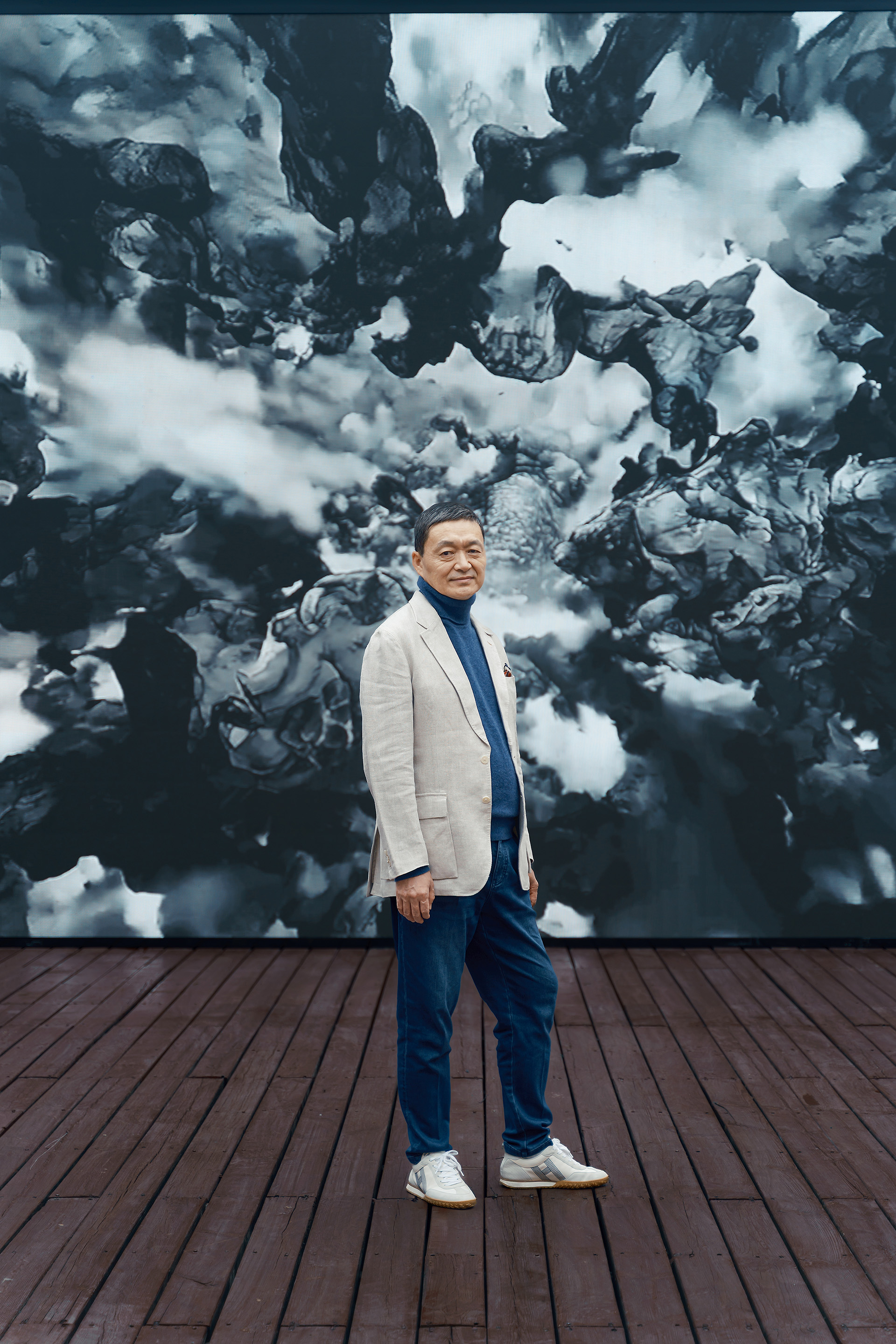
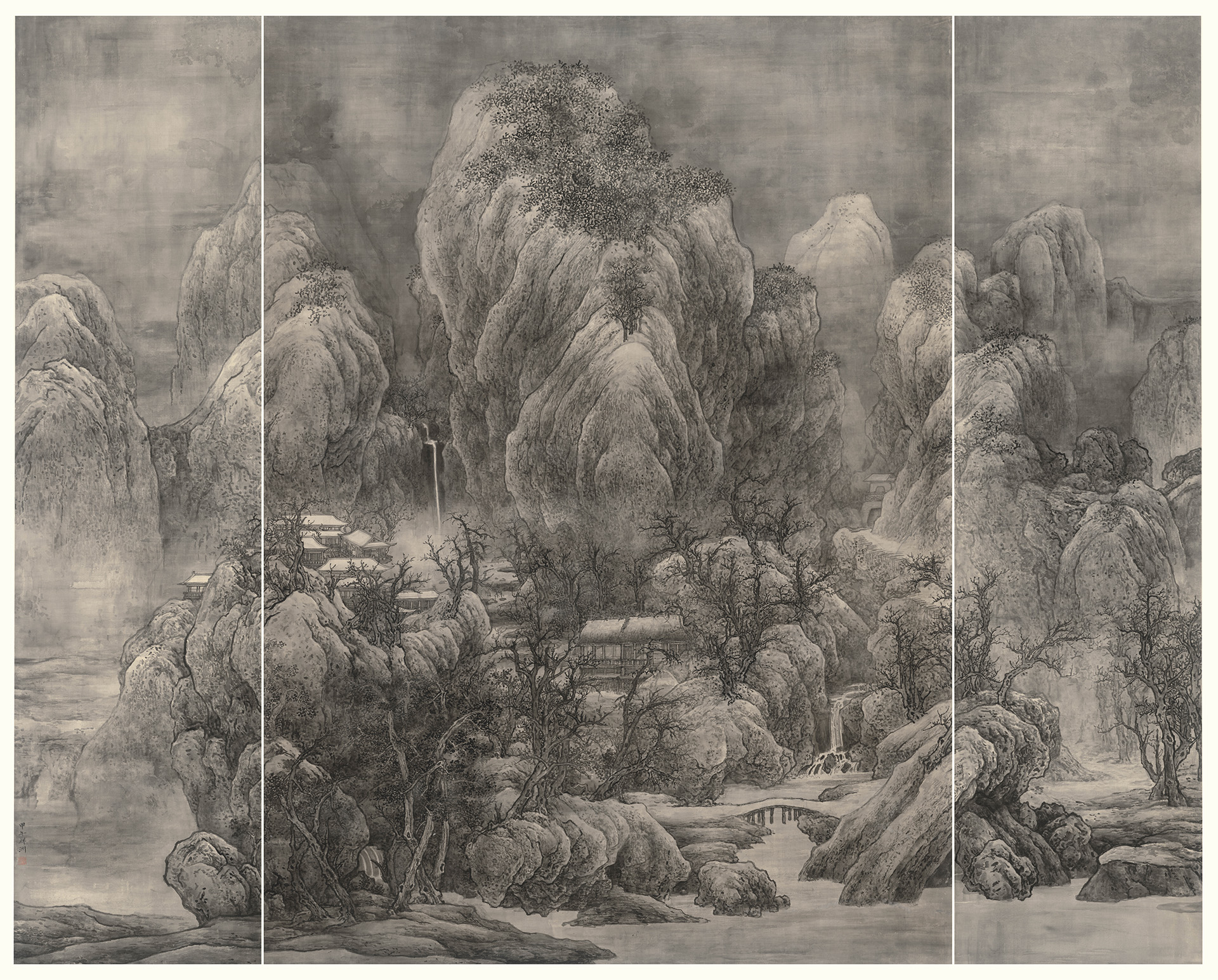
Tai Xiangzhou (b. 1968, Yinchuan, China) is a visionary artist and scholar whose work reimagines traditional Chinese landscape painting through the lens of classical Chinese art and contemporary innovation. Born into a family of scholars, Tai trained in calligraphy from age six under masters Hu Gongshi and Feng Qiyong. He later earned a doctorate from Tsinghua University, where his research traced the cosmological roots of Chinese landscape art. Merging the monumental grandeur of Song Dynasty aesthetics with Contemporaryphilosophical inquiry, Tai’s work—including celebrated series like Celestial Tales—bridges ancient traditions and global contemporary discourse. His art resides in prestigious collections such as the Art Institute of Chicago (AIC), Harvard Art Museums, Yale University, and Princeton University.
Exploring Ancient Bronzes and Jades in Ink
Deng Yuheng: Your recent ink drawings of ancient bronzes and jades engage deeply with jinshixue (the study of metal and stones). How do these works reinterpret Song/Qing epigraphic traditions, and what inspired you to embark on this new series?
Tai Xiangzhou: When we speak of reinterpretation, I must trace it back to my early studies of bronzeware. Around 2007, I was studying at Tsinghua University under Professor Li Xueqin and took his course Selected Readings in Western Zhou Texts. That was when I began a systematic study of ancient bronzes. Later, I joined an experimental archaeology program on bronzeware led by Professor Xu Tianjin at Peking University, where I delved into the historical periodization and casting techniques of bronze artifacts.
In Chinese history, especially during the Ming and Qing dynasties, there was a widespread practice of making quanxingtuo (full-form rubbings) of bronzes—some even embellished with decorative patterns—intended for literati collections. At first, I also found this practice quite fascinating. But as I gained a deeper understanding of bronzeware, I began to feel that such treatment lacked a certain sense of solemnity. Bronzes are liqi (ritual vessels). In the Shang and Zhou periods, they were not for personal use but created to venerate Heaven and honor one's ancestors. They embodied a profound sense of reverence.
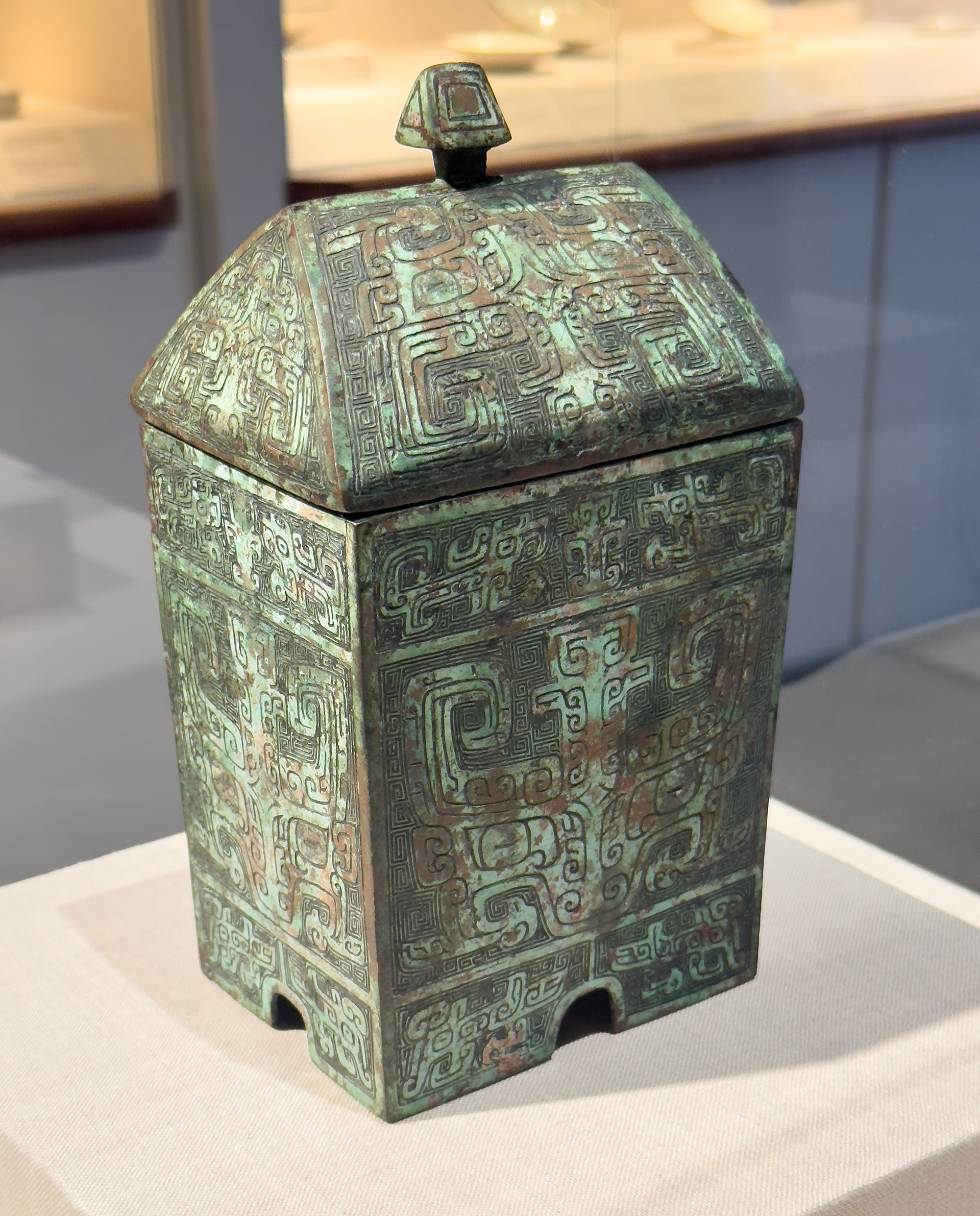
Life expectancy was short in ancient times, and the casting of a major ritual vessel might have taken a team of artisans their entire lives. The inscriptions engraved on these vessels were like covenants or dialogues between humans and the divine. If we wish to reclaim that sense of reverence today, we must return to the principles that underpinned antiquity—not merely imitate its forms. Confucius spoke of reviving Zhou ritual, and Wang Anshi also advocated a kind of restoration of antiquity—both were concerned with reviving the spirit of the Way of Heaven (tiandao), rather than copying superficial appearances.
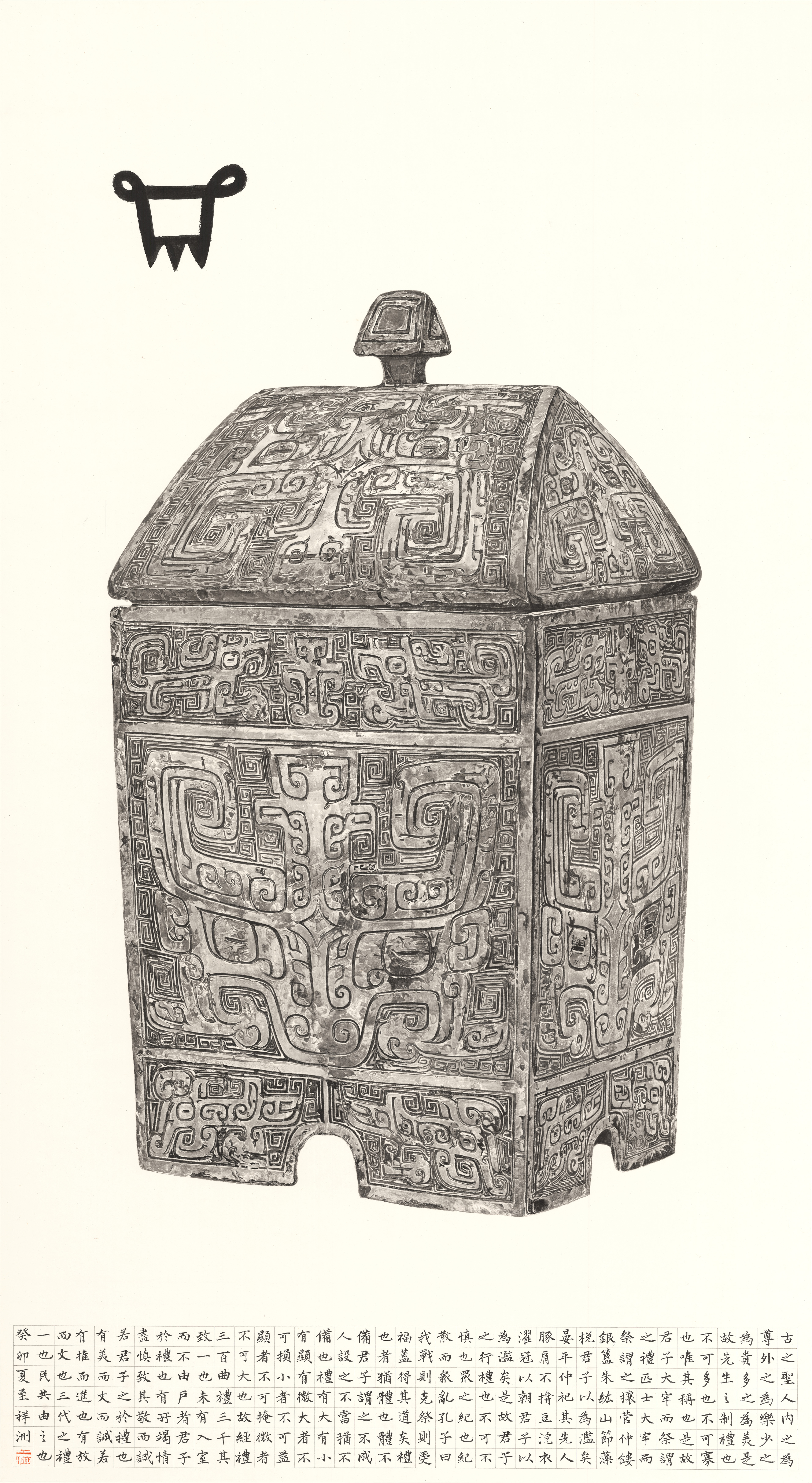
When I paint bronzeware—such as the vessel featured in The Great Way of Auspicious Metal—the object itself may only be about 40 centimeters tall, yet I use a canvas that is 2.4 meters in height to depict it. That is because it is a liqi, a ritual object, and it demands that kind of visual impact; it is not a toy. Although modern technology and architecture have advanced tremendously, our awe before nature remains no different from that of the pre-Qin people. What I hope to reclaim is that ancient psychological state of reverence for nature, and it is from within this frame of mind that I create.
Ritual Culture and Resonance with Contemporary Audiences
Deng Yuheng: The cultural significance behind ritual bronzes is profound, but for many viewers, their anceint history, and link to Chinese rituals of Shang and Zhou bronzes can be somewhat obscure and difficult to understand. How do you use contemporary reinterpretation so that these pieces resonate with today’s global audiences? And how do you think your work reflects a contemporary Chinese cultural identity in the international arena?
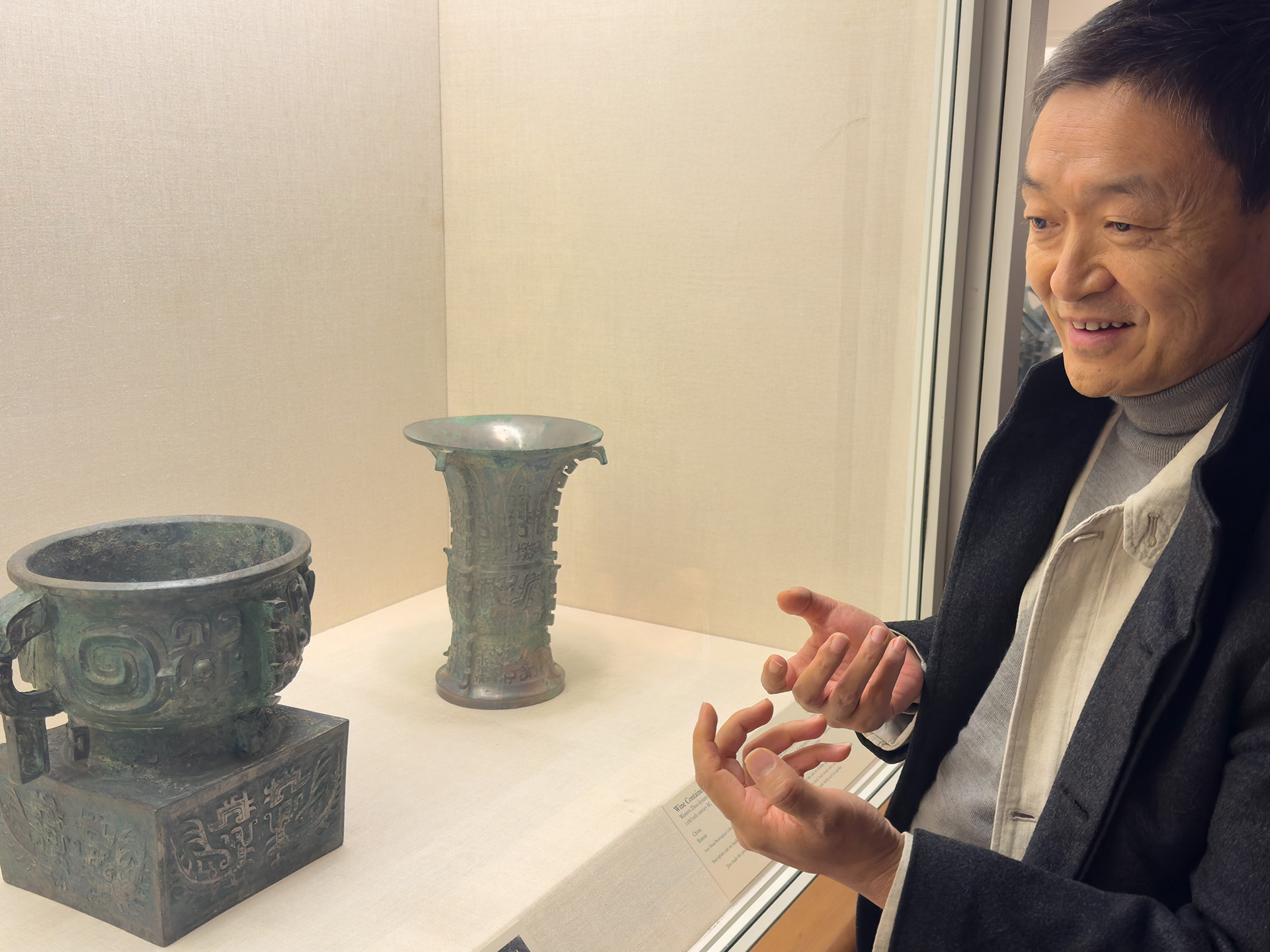
Tai Xiangzhou: Indeed, it’s a huge question. First and foremost, I want to change the way people look at bronzeware. In museums, small bronzes are often overlooked, yet in ancient times, they served as ritual vessels designed to communicate with the divine. Since antiquity, both bronzes and jades have embodied a profound reverence for the cosmos and the natural world.
Second, I have studied rubbing techniques such as yingtuo and quanxingtuo from the Ming and Qing periods, and I discovered that many literati of the time lacked a deep sense of reverence for bronzeware. They often treated these objects more as symbols of social status or personal taste. In contrast, my intention is to emphasize their sacred function as ritual vessels—using large-scale formats, for instance—and to closely examine the structures of bird, feather, cicada, and elephant motifs found on bronzes. I also explore their ritual functions in relation to seasonal cycles, spatial orientation, and cosmological order, aiming to help viewers sense how the ancients understood and related to the forces of nature.
As for contemporaneity, we must return to the fundamental principle behind it. In my work, I strive to uncover a deeper spiritual foundation rather than remain at the level of surface form. Many contemporary ink paintings either pursue innovation for its own sake—imitating Western abstract expressionism—or merely replicate the ancients without a meaningful understanding of their cultural foundations. True contemporaneity must be rooted in a profound internalization of one’s own traditional system; only then can something authentically new emerge. Such a principle-based approach around the core spirit of tradition transcends cultural boundaries and resonates with a shared human understanding. At the same time, the distinctive identity of Chinese culture quietly asserts itself in the process.

Historical Revival and Contemporary Cultural Construction
Deng Yuheng: Many innovations must be rooted in tradition. There’s an ongoing debate about tradition versus global contemporaneity in modern ink art. Your work has evolved from early explorations of Song-dynasty literati landscapes to your current focus on Shang and Zhou ritual bronzes, which seems to be a continuous dialogue with literati culture. In the context of contemporary art, how do you preserve the cultural essence of ink painting while also extending its contemporary potential?
Tai Xiangzhou: First, we must ask: What is “contemporaneity”? In my view, the contemporary is about the future—it is not merely a reflection of the present moment in which we live. I have always been in search of a certain principle. Take, for example, what you mentioned about literati painting—before we talk about the genre, we must ask: Who exactly is a literatus? Who were the original creators of wenrenhua (literati painting) in history? These are questions that go to the heart of its foundation. In a certain sense, the figure of the literatus embodies a historical worldview. Writing itself originated from astronomical observation; oracle bone inscriptions contain many highly stylized symbols. Ancient scholars and historiographers, in order to assist rulers in governance, constructed a grand cosmological system of heaven and earth divisions, which they recorded through specific diagrammatic forms. These forms later evolved into expressions within folk culture, art, and ritual.
All true contemporaneity stems from a vision of the future. Just as Einstein’s formulation of E = mc² was once a radically contemporary breakthrough that opened new chapters in physics and astronomy, so too in art history do figures like the Four Masters of the Yuan, the Four Masters of the Ming, the Four Masters of the Qing, and the Three Masters of the Song represent epochal innovators whose works defined their eras.
However, when we speak of contemporary ink, many people lack a deep understanding of their own cultural heritage. They either superficially follow the trends of abstract expressionism or latch onto the concept of wenrenhua without truly embodying the spirit of the literatus. Without becoming a true wenren (one deeply rooted in the tradition) it is difficult to create a new and grounded system of artistic expression. Innovation requires first answering the question: Who am I—and understanding the origin and trajectory of one's culture. Without that foundation, one is like a rootless tree, destined to drift.
For artists, the significance of contemporaneity lies in how one transcends time using the language of their own era. Truly great art can transcend temporal and cultural boundaries, resonating deeply with people across different ages and civilizations.

Conversation with Dr. Seung Hee Oh and Dr. Wang Tao, Curators of Chinese Art at the Art Institute of Chicago
Deng Yuheng: As curators at the Art Institute of Chicago, I have a few questions about curatorial practice around Mr. Tai’s recent works. Tai’s work blends technical mastery, scholarly depth, and specific themes around Chinese classics. Why is this fusion critical to The Art Institute of Chicago’s collection, and how does Tai’s work advance the museum’s mission?
Dr. Wang Tao: I’ll start. First, the museum’s mission is not just an abstract concept. The Art Institute of Chicago preserves and displays global art heritage, while also serving as a platform for debate, exchange of ideas, and innovation. Chicago is a very international city in its own way—modern, yet distinctly American.
From the beginning, The Art Institute has aimed to gather the best of world art to educate the public. It’s not about patriotism but about internationalism. We look for artworks that represent key traditions at a high level. In Tai’s case, it’s not just the traditional materials—brush and ink—but also how he integrates the classical epigraphy tradition (Jinshixue) with a monumental scale and universal themes. I’m a bit cautious calling them universal, because they’re also culturally specific, but his approach creates a resonance that connects ancient ritual objects with the present, possibly extending into the future.
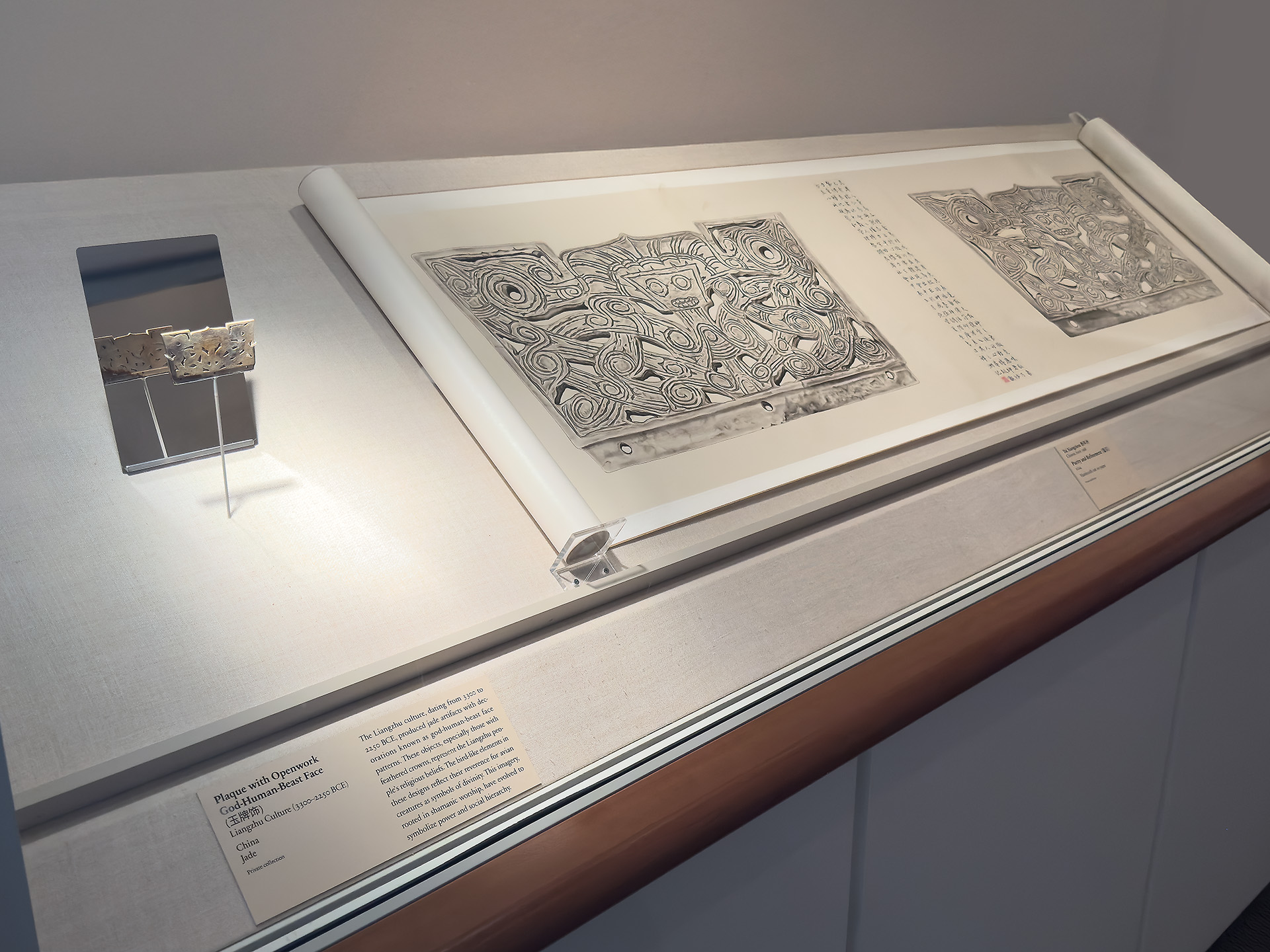
Dr. Seung Hee Oh: What makes AIC's Chinese collection special is that we have a lot of room to expand or redefine ourselves. Having Tai’s recent works on view with our permanent collection—especially bronzes and jades—helps us reinterpret what we have and present canonical objects in a fresh light.
Dr. Wang Tao: Many artists today use ink, but Tai’s deep understanding of tradition stands out. He references Song Dynasty brushwork and addresses ritual bronzes and jades—two of the most revered art forms in Chinese history. Often, such images were small-scale or strictly documentary. By enlarging them, he’s placing these ritual objects center stage, giving them a monumental presence that is quite new.
Making Ritual Concepts Accessible to Global Audiences
Deng Yuheng: Concepts like ritual in bronzes and jades can feel culturally specific. How do we make these ideas accessible to non-Chinese audiences without oversimplifying?
Dr. Seung Hee Oh: When I wrote labels and articles for Tai’s works, our editorial team actually found them quite accessible. The paintings are exhibited near authentic jade and bronze pieces, so visitors are already thinking about ancient Chinese art. Also, Tai’s works aren’t purely abstract; the monumental size and clear imagery let people engage immediately. Our main challenge is to give enough context—these objects were originally for worship of heaven and earth—without overwhelming visitors.
Dr. Wang Tao: Yes, ritual can mean different things in Western contexts, but we provide background so it’s understood these were deeply spiritual, not just decorative. Seeing the actual bronze in the gallery, then Tai’s representation, creates a dialogue across time. That synergy helps communicate the concept of ritual effectively.
Curatorial Insights and Collaboration with Tai
Deng Yuheng: From a curatorial perspective, what insights emerged through collaborating with Tai on this project?
Dr. Wang Tao: One major observation is how he captures the spirit within these bronzes and jades. He’s effectively in conversation with the object across centuries. The audience then sees the ancient piece and his large-scale depiction, joining that dialogue. When he first painted the Xiaochun fangyi in 2018, people were struck by the monumental treatment—ritual objects suddenly felt very commanding and alive.
Dr. Seung Hee Oh: He also includes textual inscriptions and classical references, which makes his work holistic and educational. It’s contemporary in style but layered with history. We want to emphasize that aspect in how we display it.
Traditional Mediums in a Global Context
Deng Yuheng: How can institutions like the The Art Institute of Chicago redefine global perceptions of ink art, and where do you see contemporary Chinese ink art heading?
Dr. Wang Tao: It’s difficult to predict the future. For East Asia, brush and ink go back thousands of years. Many artists now train in both Chinese and Western methods, so they experiment. Ink might seem like one color, but in traditional thinking, it contains five colors. Western viewers might miss that complexity initially. We see growing cross-cultural exchange—even Western artists painting with ink—so technique is widely available. The real question is: what do you express with it? Tai explores social order and spiritual aspects via ritual bronzes; others might go purely abstract. There’s space for many directions.
Contemporary artists can’t just replicate the past. They need a personal angle that resonates with today’s realities. Tai employs the brush-and-ink tradition to reanimate ancient ritual objects with a modern sense of scale and power. That’s what makes his representations of bronzes and jades so compelling—they bridge past and present with a real vitality.
Dr. Seung Hee Oh: Yes, and I’d highlight the time investment in Tai’s work. People often stereotype ink painting as spontaneous, but controlling ink on absorbent paper demands immense skill. In our contemporary age, we shouldn’t forget that craftsmanship. In future shows, I hope to bring more attention to this aspect of ink practice.
Dr. Wang Tao is the Pritzker Chair of Arts of Asia, executive director of initiatives in Asia, and curator of Chinese art at the Art Institute of Chicago, which he joined in 2015. His recent exhibitions include Expressive Ink: Paintings by Yang Yanping and Zeng Shanqing (2019), Mirroring China’s Past: Emperors and Their Bronzes (2018), and Xu Longsen: Light of Heaven (2018).
Prior to joining the Art Institute, Tao worked as senior vice president and head of Chinese works of art at Sotheby’s New York and was a professor at the University of London. He has published widely on topics related to Chinese art and archaeology and has won the China National Book Award and Antiquity’s Best Article prize. Tao holds a PhD in early Chinese culture from the University of London.
Dr. Seung Hee Oh is Assistant Curator of Chinese Art in the Arts of Asia department at the Art Institute of Chicago. Prior to joining the Art Institute in 2023, she worked for East Asian art collections at the Harvard Art Museums, Smithsonian’s National Museum of Asian Art, Villa I Tatti, and Seoul National University Museum, and taught at the University of Connecticut. Seung Hee holds PhD from Harvard University, specializing in Chinese painting and later Buddhist art.
Yuheng Deng is a scholar and curator specializing in East Asian art. He holds an MA in the Humanities with a concentration in Art History and Curatorial Studies from the University of Chicago. He currently serves as Assistant to the Associate Director at the Center for the Art of East Asia. His work bridges academic research and museum practice, with a focus on fostering cross-cultural dialogue and expanding the global understanding of East Asian visual culture.