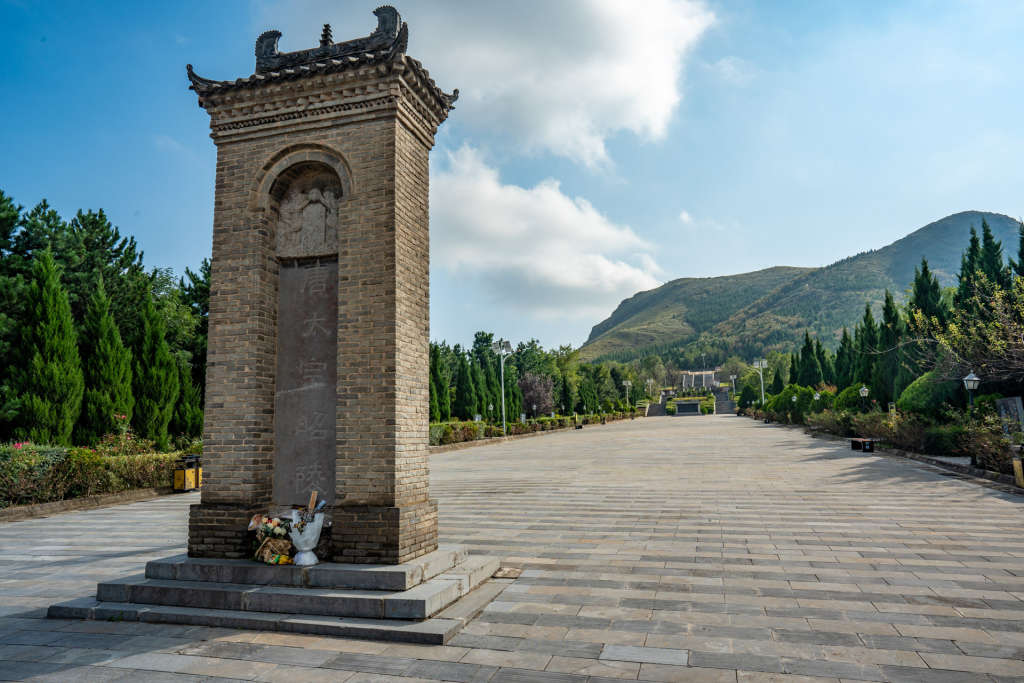
The Six Horses of Zhaoling
Digital Restoration
Highlights
This rendered video presents the digital reconstruction of the Six Horses of Zhaoling and the upper terraces of Emperor Taizong's mausoleum. The reconstruction draws together 3D scans of the surviving reliefs — four at the Xi'an Beilin Museum and two at the Penn Museum — with archaeological and historical research on the tomb's original setting.
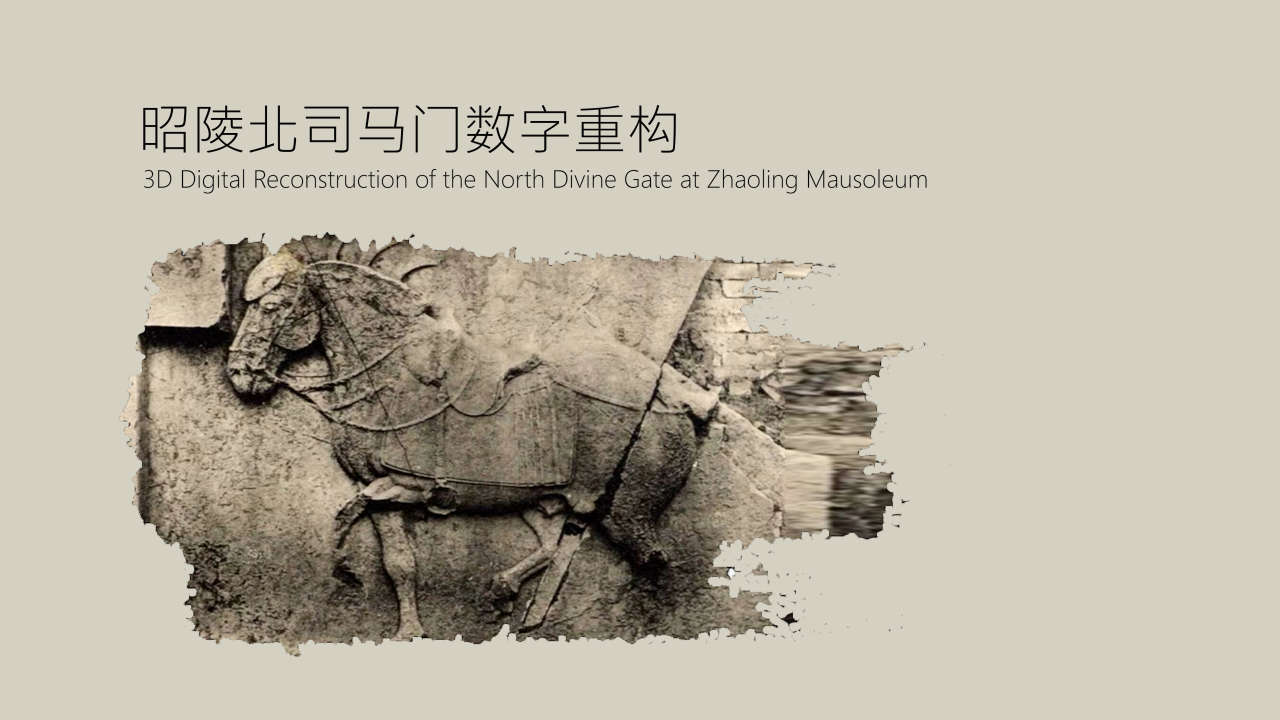
Features
The Six Stone Horses of Zhaoling
The creation and travels of Tang Taizong's six royal steeds
Horses in Stone, Life on the Edge: Animals in Chinese Funerary Art
Long known as the Six Horses of Zhaoling, the mausoleum of Emperor Taizong (598–649), they were carved as relief on large stone panels, each roughly life-sized in presence and mounted originally on stone pedestals. Why are they there and what do they stand for?
The Six Steeds of Zhaoling: Recovering an Original Spatial Form
A masterpiece of Tang dynasty art has been understood primarily as relief sculpture. New research argues that its original form—and meaning—was something different.
Gallery
Professor Chen Qiang on the upper tier of Zhaoling; 2024
Group shot at the UPenn Museum. Left to right: Guanhong Liu, Ouyang Zhenyu, Adam Smith, Stephen A. Lang; 2025
Professor Ouyang Zhenyu 3d scanning Quanmaogua at the UPenn Museum; 2025
Group shot at the UPenn Museum. Left to right: Professor Jia Zhuofei, Mengge Cao, Liang-Chun Wu, Guanhong Liu, Ouyang Zhenyu, Adam Smith, Stephen A. Lang; 2025
Viewing the modern Zhaoling site from above
Katherine Tsiang viewing a test model of of the horse screens at the studio of Prof. Jia Zhuofei